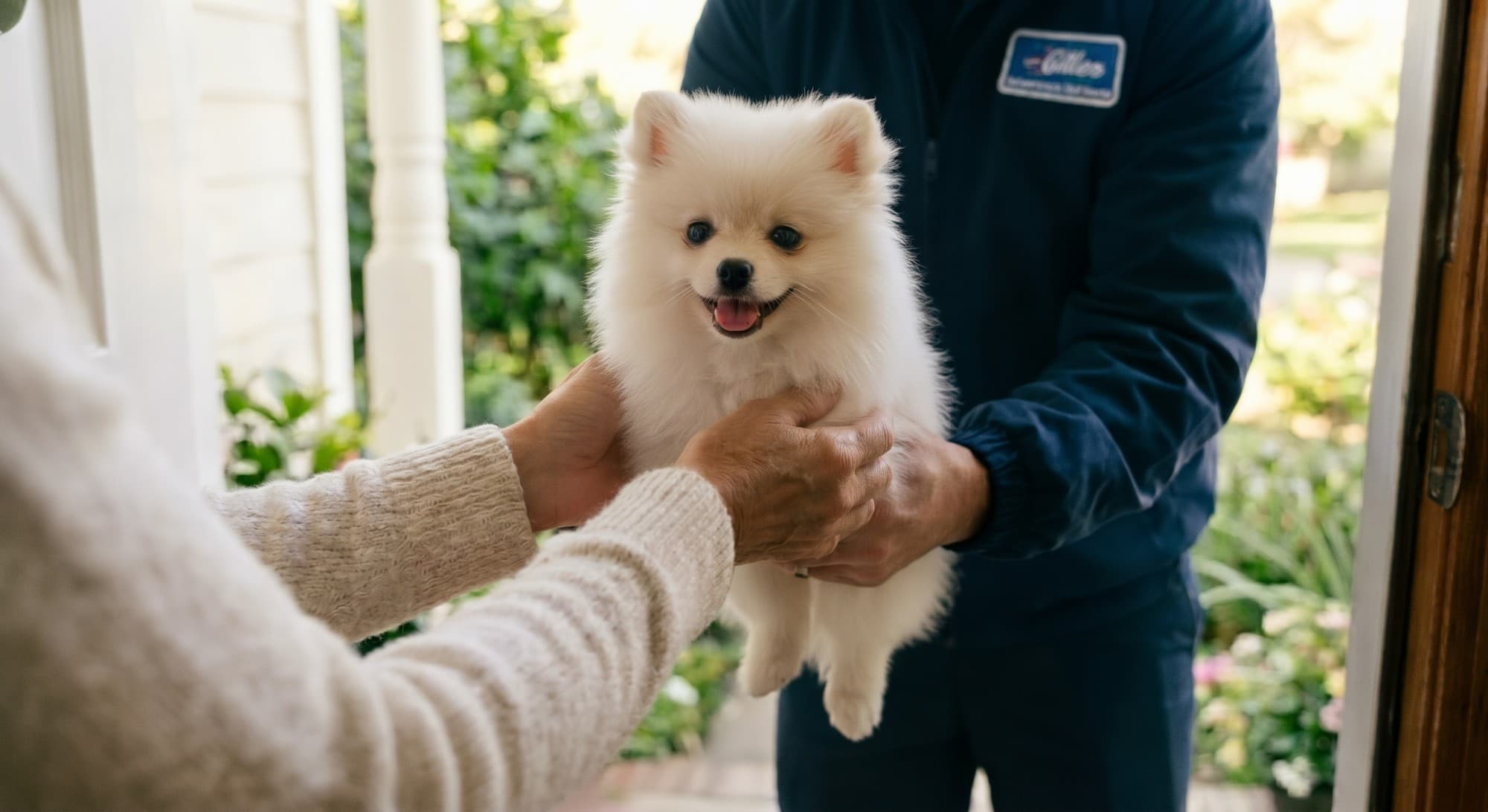
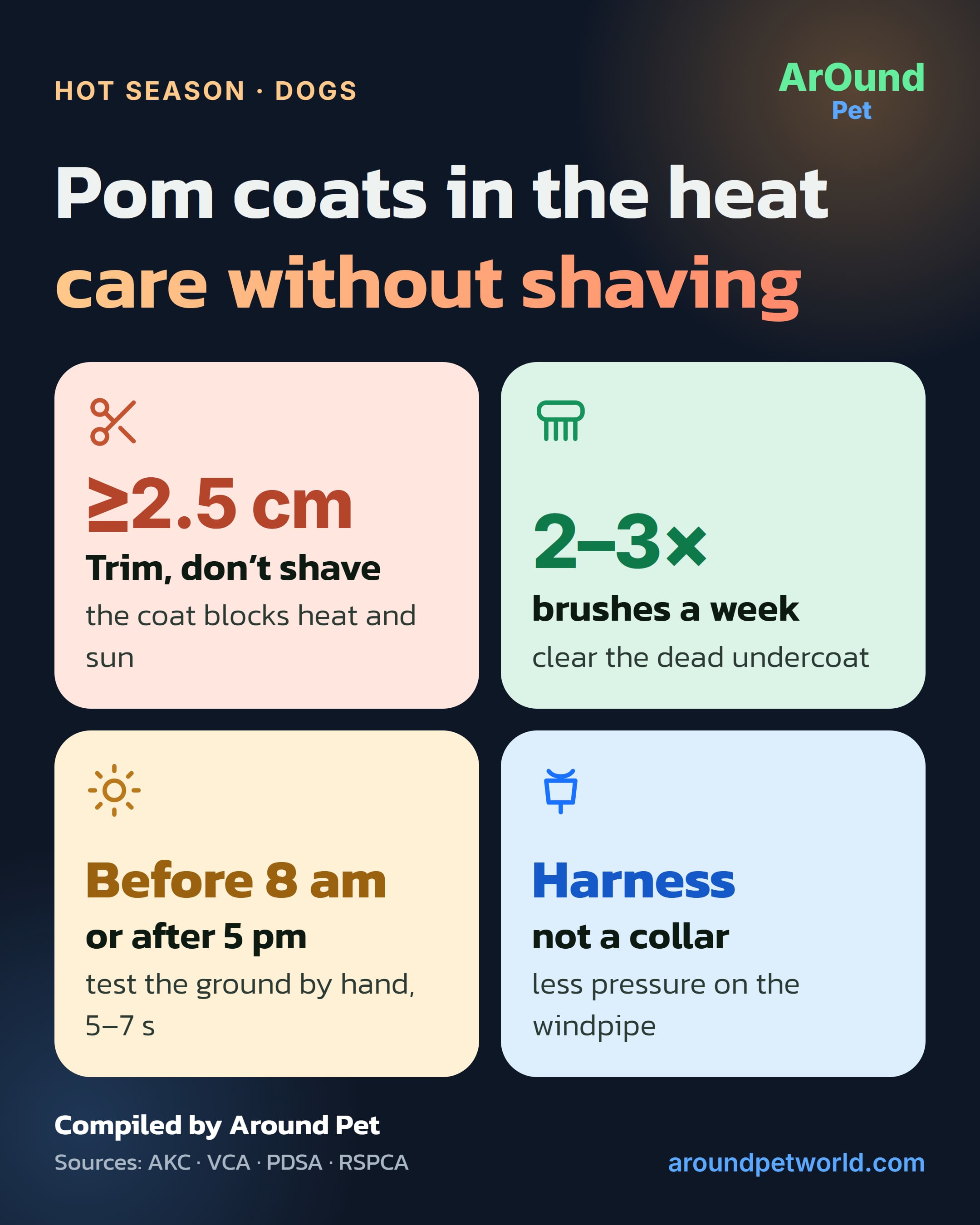
Thailand’s hot season, from March to May, often climbs above 35 °C with high humidity. For a small, thick-coated dog like a Pomeranian, it’s a season that needs extra care, but the right answer may not be shaving the coat as many people think.
How a double coat works
The outer coat also guards against sunburn and insect bites.1 So the two layers aren’t a winter jumper to take off in summer: they are a protective system that works all year round.
Why not to shave it short
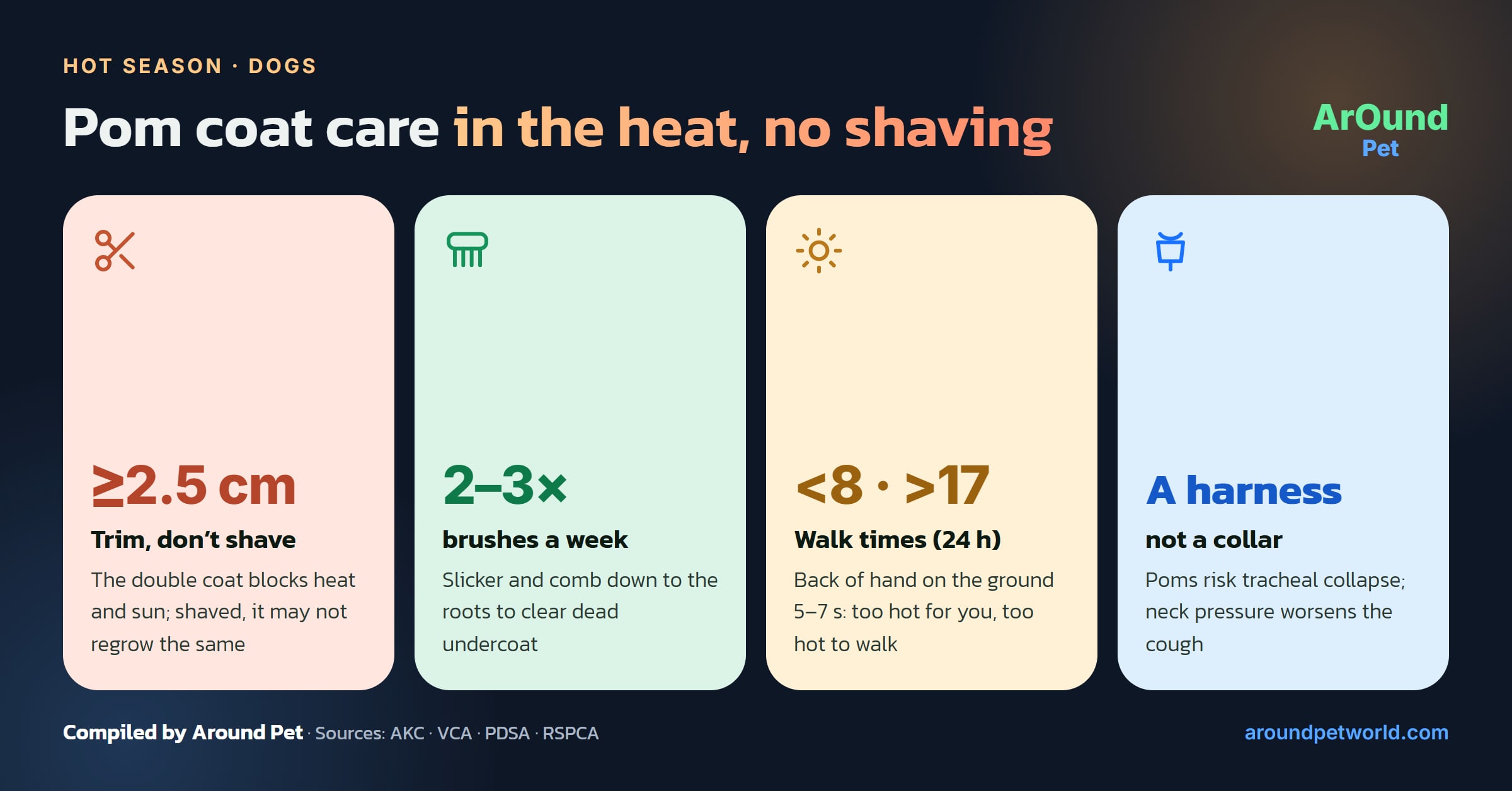
The AKC’s chief veterinary officer explains that the coat acts as insulation, so shaving it off may even make a dog more prone to heatstroke.1 Shaving doesn’t reduce shedding either, and because the two layers grow at different rates, the undercoat can outgrow the guard hairs and stop them coming through, changing the coat’s texture or colour or leaving it patchy.12
VCA lists Pomeranians among the breeds that can develop post-clipping alopecia, where in some cases the coat takes up to about 2 years to grow back.3
- Shaving down to the skin, unless a vet advises it, for example before surgery, to treat a wound or for severe matting1
Brush instead of shaving
The thing that helps a Pom most in the hot season is brushing out the dead undercoat, so air can move through the coat better.
- Brush 2–3 times a weekand more often while shedding.9 Dogs in hot climates may shed all year or several times a year.2
- Use a slicker brush with a combBrush right down to the roots to remove dead hair, spread the natural oils and keep the skin healthy.2
- Check the fur around the bottom dailyto keep it clean with nothing stuck there.10
Bathing and drying
Brush out every tangle before the bath, because once wet they won’t come out. Don’t bathe too often, as it strips the skin’s oils. Use dog shampoo only, never human shampoo, rinse thoroughly, then dry the coat.23
Walks in the hot season
Pick shady routes and always carry water.8 The RSPCA says dogs are about 10 times more likely to suffer heat illness on hot-day walks than from being left in cars, and a thick coat is one of the risk factors.6
Use a harness instead of a collar
Pomeranians are a breed often affected by tracheal collapse. The goose-honk cough tends to get worse with excitement, hot humid weather, or pressure on the neck from a collar, so VCA recommends a harness instead.49 PDSA also suggests a harness for walks.5
Heatstroke signs and first aid
- Stop all activity at onceMove your dog into the shade or a cool room.56
- Pour cool water over the bodyUse cool tap water, not ice, avoid the head and mouth, and use a fan or let air flow over them.56
- Put wet towels underneath, not on topbecause covering your dog traps the heat.56
- Get to a vet quicklyCool the car with air conditioning first and keep cooling your dog on the way: cool first, then transport.56
Even if your dog seems to have recovered, still have a vet check them, because heat can affect internal organs in ways you can’t see from outside.
Compiled by Around Pet
This article was written afresh by the Around Pet editors from the sources below, as general information for pet owners. It is not a diagnosis or treatment advice. Heatstroke is an emergency: contact a vet straight away.
Sources
- American Kennel Club (AKC) Is It OK to Shave Your Dog's Coat in Summer? (2026)
akc.org/expert-advice/health/is-it-ok-to-shave-your-dog - American Kennel Club (AKC) How to Groom a Double-Coated Dog (2024)
akc.org/expert-advice/health/how-to-groom-a-double-coated-dog - VCA Animal Hospitals Grooming and Coat Care for Your Dog (2026)
vcahospitals.com/know-your-pet/grooming-and-coat-care-for-your-dog - VCA Animal Hospitals Tracheal Collapse in Dogs (2026)
vcahospitals.com/know-your-pet/tracheal-collapse-in-dogs - PDSA Heatstroke in dogs (2023)
pdsa.org.uk/…/all-pets/heatstroke - RSPCA How to Recognise & Treat Heatstroke in Dogs
rspca.org.uk/adviceandwelfare/pets/dogs/health/heatstroke - American Kennel Club (AKC) Hair Coat Disorder in Schipperkes Resembles Alopecia X (2019)
akc.org/expert-advice/dog-breeding/hair-coat-disorder-schipperkes-resembles-alopecia-x - PDSA 8 steps to safely exercising your dog in hot weather (2021)
pdsa.org.uk/what-we-do/blog/8-steps-to-safely-exercising-your-dog-in-hot-weather - PDSA Pomeranian
pdsa.org.uk/…/small-dogs/pomeranian - VCA Animal Hospitals Pomeranian (breed profile)
vcahospitals.com/…/dog-breeds/pomeranian