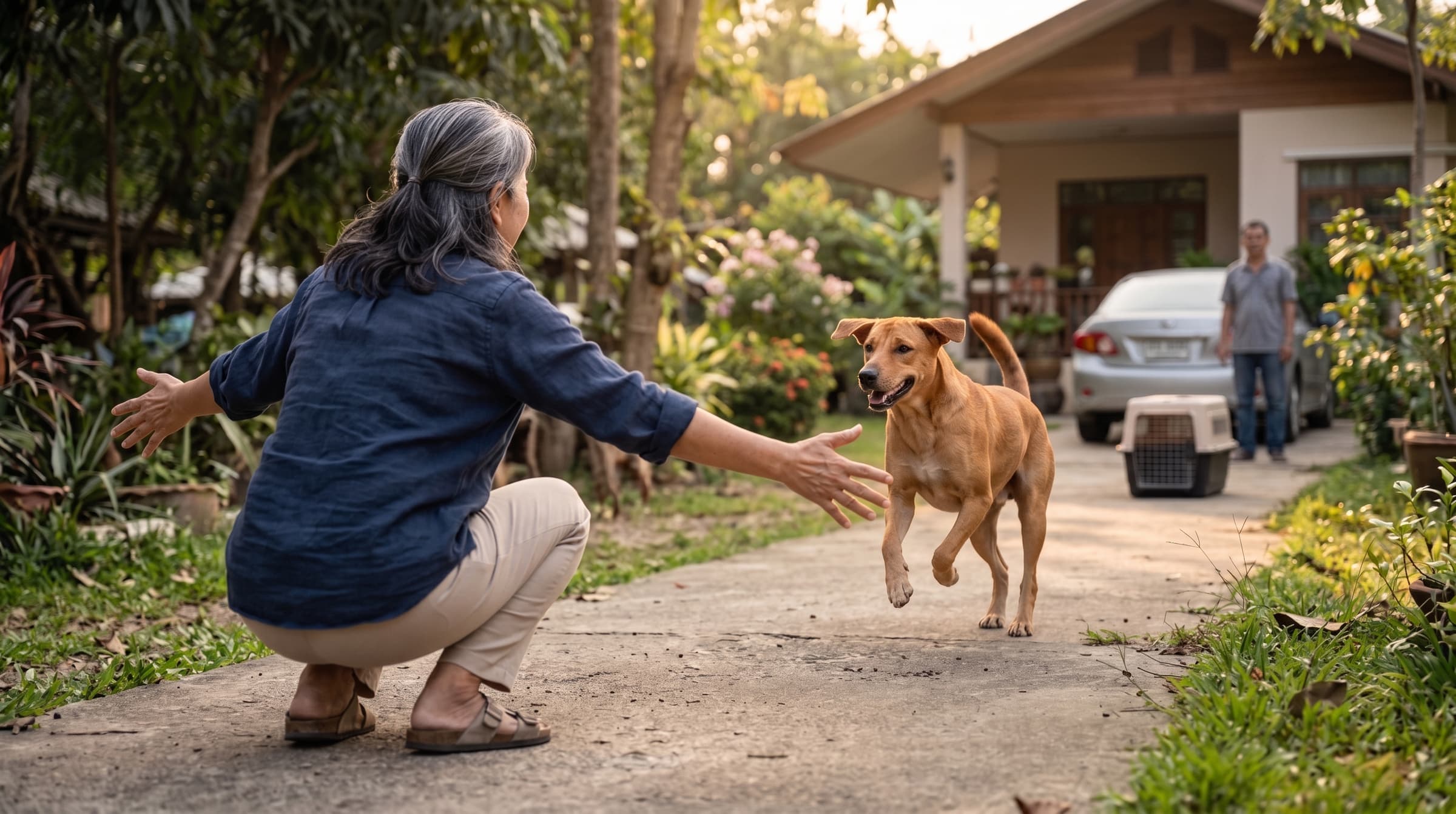
Bringing a dog home is exciting, but for the dog everything is new: the smells, the sounds and the people. Getting the house ready in advance helps twice over. It prevents accidents, and it helps your dog feel safe sooner.
See the house from their side
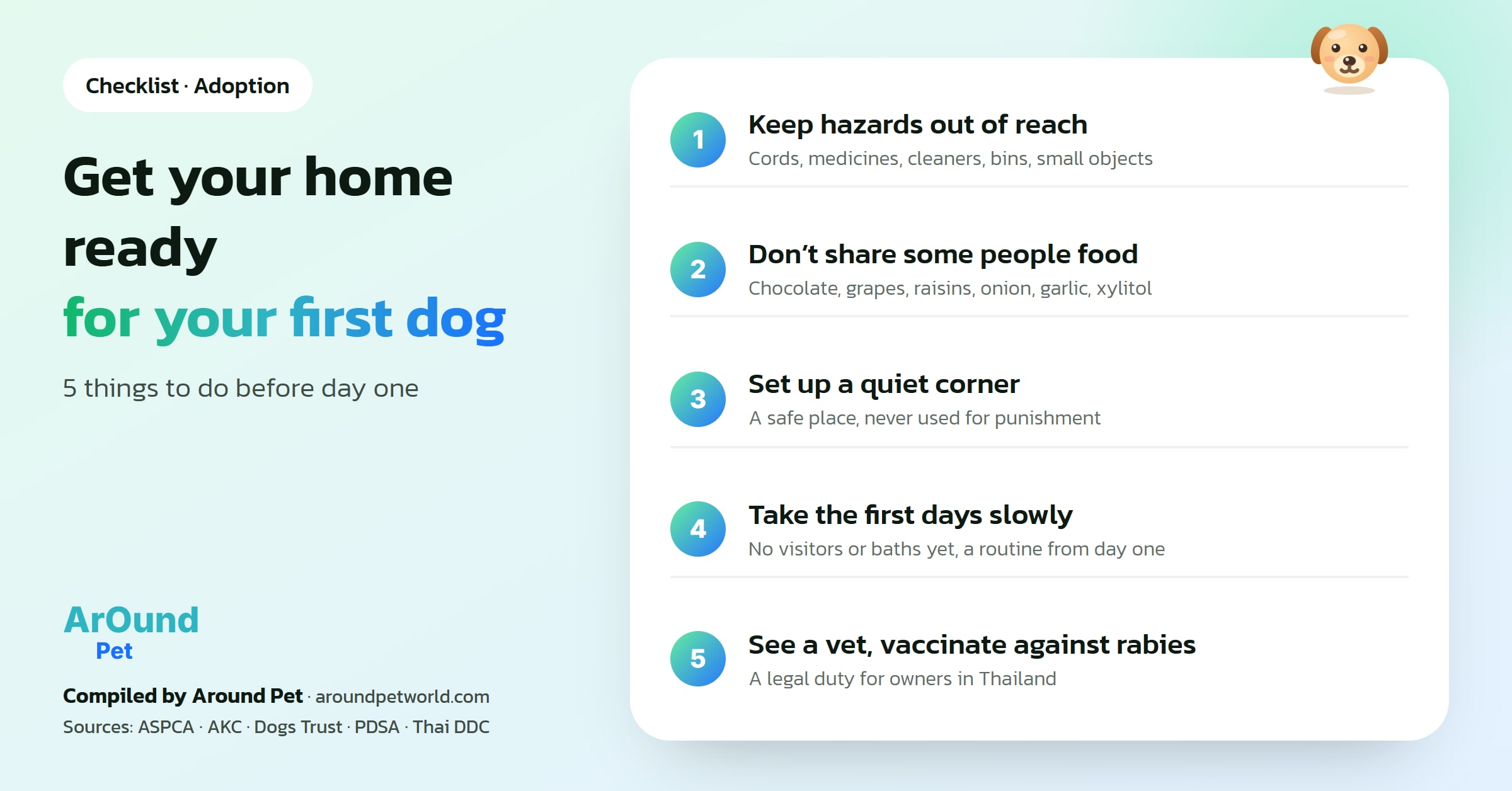
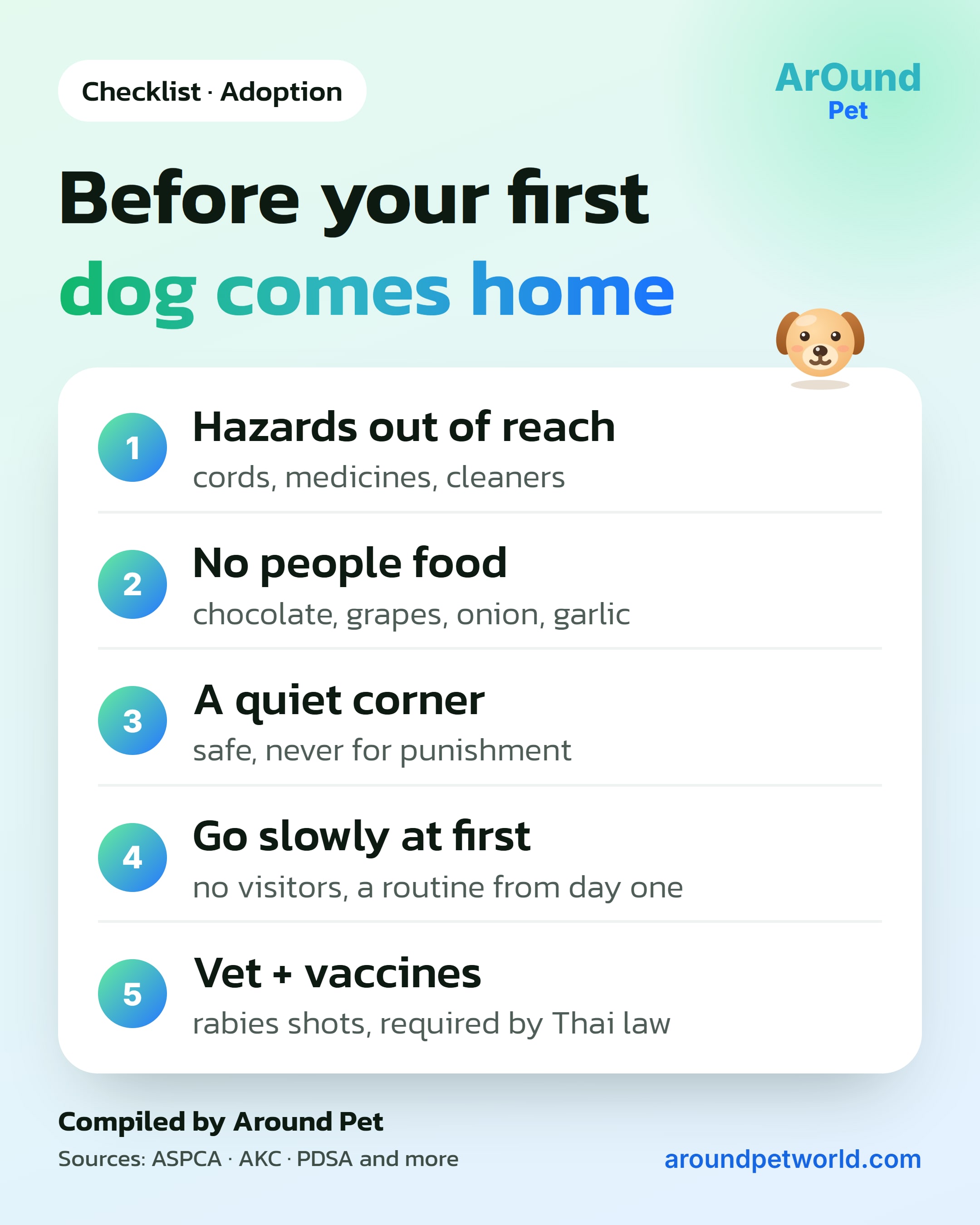
Crouch down to your dog’s eye level and look for anything they could chew, lick or swallow. These are the spots people most often miss.14
- Power cords and chargers: a risk of mouth burns and electric shock
- Human and pet medicines, kept in a high or locked cupboard
- Cleaning products and household chemicals
- Bins without a lid
- Toilets left open, and blind cords
- Small objects that can be swallowed, and sharp things
- House plants that are toxic to dogs
- Doors and windows left open
If you have a garden, check the fence is high enough with no gaps to squeeze through, fence off any pool, keep off lawns that were just sprayed, and always have shade and clean water on hot days.14
People food to keep away
Many foods that are safe for people can harm dogs. Agree as a household never to share these.2
- Chocolate and caffeine, such as coffee and tea
- Xylitol, a sweetener in some gum and snacks, which can cause low blood sugar and liver damage
- Grapes and raisins, which can harm the kidneys
- Onions, garlic and chives, which damage red blood cells
- Macadamia nuts and alcohol
- Raw yeast dough, and very salty or fatty food
Raw meat and eggs can also carry bacteria, bones can cut or block the gut, and milk often gives dogs diarrhoea because they digest lactose poorly.2
Supplies to have before day one
This list draws on advice from animal welfare organisations.34 One more thing that helps a lot is an enzymatic cleaner for accidents, because it removes the smell that can draw your dog back to the same spot.3
Their resting corner
Put the bed or a covered crate in a quiet corner with little foot traffic, away from windows and busy spots.34 This corner should truly be their safe place: when your dog goes there to rest, everyone leaves them in peace, and it is never used for punishment.5
The first few days: take it slowly
- Keep expectations lowSkip visitors for the first few days, and put off baths and nail trims until your dog feels at home.35
- Stay close at firstThe ASPCA suggests not leaving your new dog alone for the first 48 hours.3
- Start a routine on day oneSet regular times for meals, walks and play, and agree the house rules as a household.35
- Let them choose when to come to youThere is no need to rush into hugs or picking them up. Let your dog come over when they are ready.5
- House-train with rewardsTake them out often, praise and reward the moment they go in the right place, and accept that accidents are normal.34
The first vet visit
Find a regular clinic near home early, and ask whether they offer out-of-hours care.4 Book the first check-up within a few days of bringing your dog home, and take their vaccination and worming records, microchip details if any, and what they currently eat. The vet will do a full health check and talk about vaccines, parasite control, diet and neutering.6
What owners in Thailand should know
Rabies vaccination is a legal duty
Thailand’s Rabies Act B.E. 2535 (1992) requires owners to have their dogs vaccinated against rabies and to have them wear the tag issued after vaccination.8 The Department of Disease Control advises the first dose at around 2–4 months of age, then a booster every year.9 Check the right timing for your dog with your vet.
Microchips and registration in Bangkok
Bangkok has an ordinance on keeping and releasing animals that covers microchipping and registering dogs and cats. It was due to take effect in January 2026, but the governor proposed delaying enforcement by a year.10
Thai hot weather
Walk your dog early in the morning or in the evening, keep routes shorter, carry water, and skip the walk on very hot or humid days.7 At home, always provide shade and clean water.1
Compiled by Around Pet
This article was written afresh by the Around Pet editors from the sources below, as general information for pet owners. It is not a diagnosis or treatment advice. Laws may change, so check with the relevant authorities, and if your pet seems unwell, please see a vet.
Sources
- American Kennel Club (AKC) Puppy-Proofing Your Home and Yard (updated 2026)
akc.org/expert-advice/home-living/puppy-proofing-tips-for-your-home-and-yard - ASPCA People Foods to Avoid Feeding Your Pets
aspca.org/pet-care/aspca-poison-control/people-foods-avoid-feeding-your-pets - ASPCA Tips for a New Dog
aspca.org/pet-care/general-pet-care/tips-new-dog - Dogs Trust Puppy checklist: what do you need for a puppy?
dogstrust.org.uk/dog-advice/puppy/checklist - Battersea How to settle in your new puppy or dog (updated 2026)
battersea.org.uk/pet-advice/dog-advice/how-settle-your-new-puppy-or-dog - The Royal Kennel Club Your puppy's first visit to the vet
royalkennelclub.com/…/your-puppys-first-visit-to-the-vet - PDSA Dogs die in hot cars (and on hot walks)
pdsa.org.uk/…/dogs-die-in-hot-cars-and-on-hot-walks - Ministry of Agriculture and Cooperatives (Thailand) Rabies Act B.E. 2535 (1992), English translation
moac.go.th/db-law_agri-files-431091791797 - Department of Disease Control, Ministry of Public Health (Thailand) กรมควบคุมโรค แนะประชาชนพาสุนัข-แมว ไปฉีดวัคซีนป้องกันโรคพิษสุนัขบ้า [Disease Control urges owners to have dogs and cats vaccinated against rabies] (2022)
ddc.moph.go.th/brc/news.php?news=24026 - Thai PBS กทม.เสนอชะลอบังคับใช้ข้อบัญญัติควบคุมการเลี้ยงสุนัขและแมว 1 ปี [Bangkok proposes delaying its dog and cat ordinance by a year] (7 Jan 2026)
thaipbs.or.th/news/content/500851